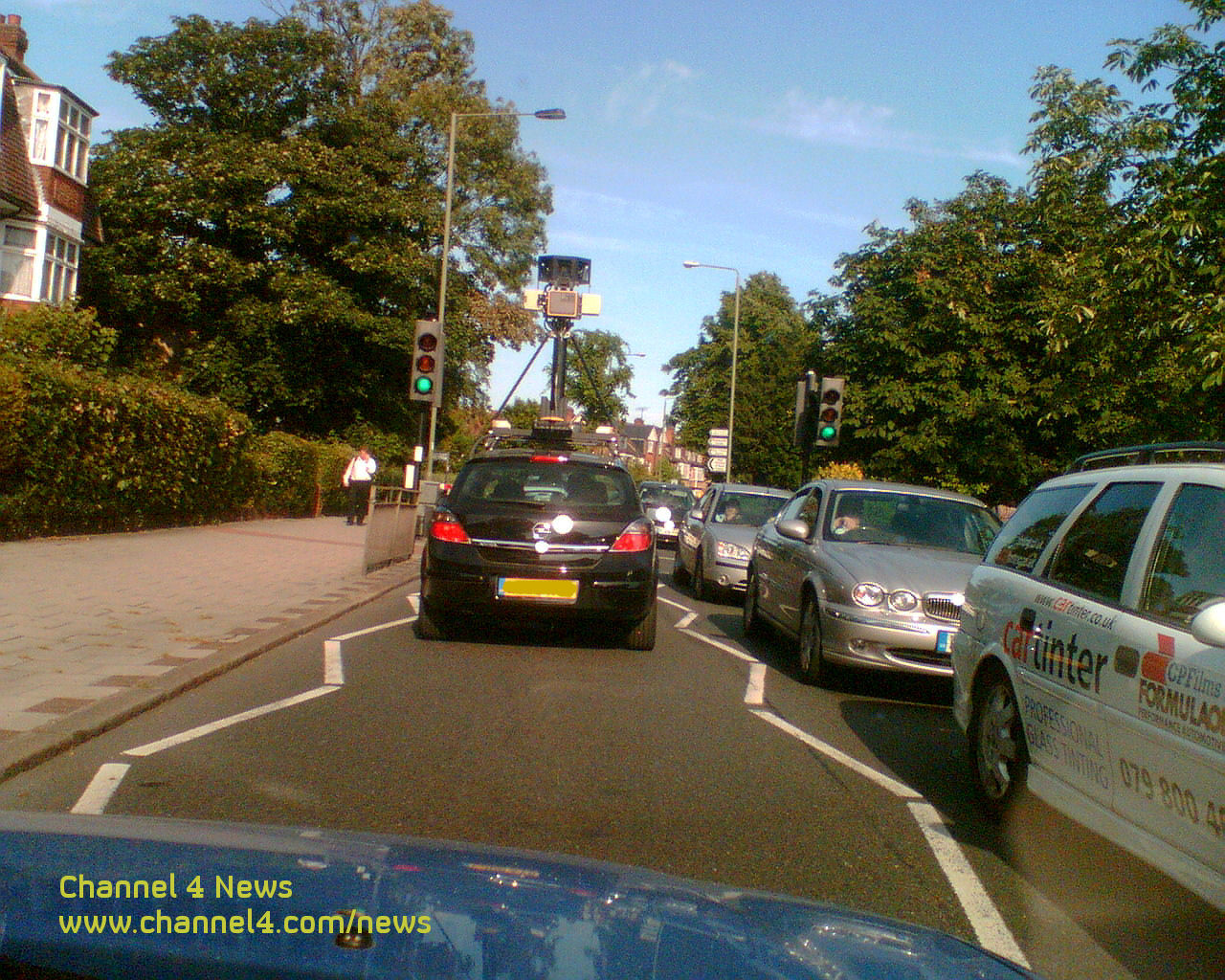
A small black Opel car with a high roof-mounted camera and a Google logo was spotted by one Flickr user and by Channel 4 News, indicating that Google is gathering data for a London Steet View service.
Google confirmed today that it is gathering data in Europe and "London may be one of the cities included when we launch Street View in Europe". Internet message board posts have said that the cars have also been spotted in Edinburgh, Cardiff, Birmingham, Leeds and Middlesbrough.
"Our users have been asking for the service ever since we launched in the US and we are very excited about bringing it to Europe," a Google spokeswoman told OUT-LAW.COM. "Soon people from all over the world will be able to explore the beautiful cities of Europe right from their desks."
Street View takes 360 degree photographs of city streetscapes and integrates them with the company's mapping tool to allow people to see addresses or streets and also to travel through streets online, one photo at a time.
The service has proved controversial with privacy activists who worry that people's identities and locations are being published online without their permission.
A couple in the US has filed a lawsuit against Google, claiming that Street View's pictures of their house were intrusive and that the car must have trespassed on private land to take the pictures.
Google has said, though, that it will adapt its processes for particular legal environments, and that it is aware that Europe has stronger privacy laws and more stringent expectations than the US.
"We've always said that Street View will respect local laws wherever it is available and we recognize that other countries strike a different balance between the concept of 'public spaces' and individuals' right to privacy in those public spaces," said Google global privacy counsel Peter Fleischer in a blog post last year. "There's an important public policy debate in every country around what privacy means in public spaces. That balance will vary from country to country, and Street View will respect it."
Struan Robertson, a technology lawyer with Pinsent Masons and editor of OUT-LAW.COM, said that the site would only cause problems under certain circumstances.
"There is only a privacy issue if people or the number plates of their vehicles can be identified from the photographs. Even then, because the cameras are not targeting anyone in particular, it would be difficult to argue that what Google is doing is breaching anyone's right of privacy," he said.
A recent ruling by the Court of Appeal in a case involving children's author JK Rowling could help Google's case. Rowling was protesting on behalf of her then-infant son about photographs taken of him on the street in 2004.
That Court upheld Rowling's case, but said that the child's privacy was invaded because he was the target of the photograph. Sir Anthony Clarke, in the ruling, said that the same protection was not to be extended to people who just happened to be in a photographed street.
"If the photographs had been taken, as Lord Hope put it [in another case], to show the scene in a street by a passer-by and later published as street scenes, that would be one thing, but they were not taken as street scenes but were taken deliberately, in secret and with a view to their subsequent publication," he said in his ruling.
Fleischer has said in the past that Google would be prepared to use face blurring technology or to lower the resolution of the images in Europe to alleviate privacy fears. Google also has a policy of removing photographs on request from individuals pictured.
"Google has to be sensitive to places where people have an expectation of privacy. Google knows that it mustn't go snapping people in their back gardens, for example," said Robertson. "While there will always be some people who object to the photos being taken in the first place, I really don't think it's something that laws can stop."